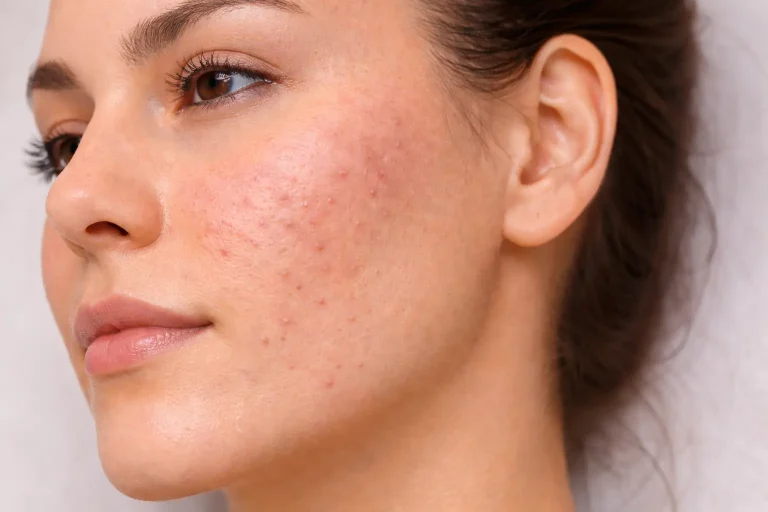
Most people are not neglecting their skin. They are doing quite a lot to it, and some of what they are doing is working against them. Ten products, three exfoliants, a new serum every few weeks, and a growing sense that nothing is helping.
Almost everyone reading this will recognise two or three of the habits below. That is normal, and none of it is cause for embarrassment. Skin responds well to consistency and poorly to enthusiasm, which is the opposite of how most routines are built.
1. Treating Sunscreen as Optional
This is the big one, and it is not close. Ultraviolet exposure drives the majority of visible skin ageing, and it is the one factor you can genuinely control every day. A randomised controlled trial published in the Annals of Internal Medicine followed adults over four and a half years and found that those using sunscreen daily showed no detectable increase in skin ageing, while the group applying it at their own discretion did.
Three specific errors within this one:
- Skipping it in winter. Snow reflects UV back at you, and cloud cover does not block it. In the Canadian prairies, bright cold days are still UV exposure days.
- Relying on the SPF in foundation or moisturiser. The rating is achieved at an application thickness almost nobody uses on a made-up face.
- Applying too little. Most adults need roughly a teaspoon for the face and neck, which is considerably more than the pea-sized amount people tend to use.
2. Over-Exfoliating
Exfoliation gives quick, visible smoothness, which makes it very easy to overdo. A scrub, an acid toner, a weekly peel pad and a retinoid together will strip your barrier faster than any of them individually would suggest.
The confusing part is that barrier damage often looks like the problem you were treating. Skin becomes reactive, shiny in an irritated way rather than a healthy way, and breaks out. The instinctive response is to exfoliate more.
| Signs your barrier is struggling | What to do for two to three weeks |
|---|---|
| Stinging or burning from products you used to tolerate | Stop all exfoliants, acids and retinoids completely |
| Tightness after cleansing | Switch to a gentle, non-foaming cleanser and lukewarm water |
| New redness or blotchiness | Use a simple moisturiser with ceramides or glycerin, twice daily |
| Flaking alongside oiliness | Continue sunscreen every morning without exception |
| Breakouts that appeared after adding products | Reintroduce one active at a time, at low frequency |
For most skin types, exfoliating two or three times a week is plenty, and some people do better with once.
3. Introducing Several Actives at Once
A new vitamin C, a new retinoid and a new acid in the same week means that when your skin reacts, you have no idea which product caused it. You then throw out all three, including the one that was working.
Add one new active product at a time and give it two to four weeks before adding another. It is slower and it is the only approach that produces usable information.
4. Giving Up Too Early
Skin cell turnover takes roughly a month in younger adults and longer with age. Almost nothing in skincare works in a week, and the products with the best evidence behind them are among the slowest.
| Product type | Realistic timeline | What you should notice first |
|---|---|---|
| Moisturiser | Days | Comfort and reduced tightness |
| Sunscreen | Years, preventively | Nothing immediate; that is the point |
| Vitamin C | 8 to 12 weeks | Gradual brightening, more even tone |
| Niacinamide | 4 to 8 weeks | Less visible redness, better oil balance |
| Retinoid | 12 weeks or more | Texture first, then fine lines |
| Acne treatment | 6 to 12 weeks | Fewer new spots before existing ones clear |
General guidance only. Individual response varies, and prescription treatments follow their own timelines under medical supervision.
Retinoids also commonly cause an initial adjustment period with dryness and flaking. That is expected and usually settles. Genuine ongoing irritation is not, and means reducing frequency rather than pushing through.
5. Washing Too Often, Too Hot, or Too Harshly
If your face feels squeaky clean and tight afterwards, the cleanser removed more than it needed to. That tight feeling is not cleanliness, it is a stripped barrier.
- Twice daily is enough for most people, and once at night is fine for dry or sensitive skin.
- Use lukewarm water. Hot water feels satisfying and worsens dryness and redness.
- Skip the rough physical scrubbing. Thirty to sixty seconds with your fingertips does the job.
- Always remove sunscreen and makeup properly at night. Sleeping in either is a reliable way to congest skin.
6. Skipping Moisturiser Because Your Skin Is Oily
Oil and water are different things. Skin can produce plenty of oil and still be short of water, and stripping it dry often prompts more oil production rather than less.
Oily skin usually does better with a light gel or lotion than with nothing at all. The distinction worth learning is between dry skin, which lacks oil and tends to flake, and dehydrated skin, which lacks water and tends to look dull and feel tight regardless of how oily it is.
7. Picking and Squeezing
Everyone knows this and most people do it anyway. The reason it matters is that pressure pushes inflammation deeper, and the result is often a dark mark that outlasts the original spot by months, or a scar that does not fade at all.
Post-inflammatory hyperpigmentation is far harder to treat than the blemish was. If extractions are needed, they are worth having done properly rather than in front of a bathroom mirror at midnight.
8. Forgetting Everything Below the Jawline
The neck, chest and backs of the hands show sun damage as clearly as the face and are consistently under-treated. A well-maintained face above a sun-damaged neck is a common and entirely avoidable mismatch. Extend your sunscreen and your moisturiser downward.
9. DIY Remedies That Damage Skin
- Lemon juice is highly acidic and can cause irritation and, with sun exposure, a phototoxic reaction that leaves lasting pigmentation.
- Baking soda is strongly alkaline and disrupts the skin’s naturally acidic surface.
- Toothpaste on spots contains irritants never intended for skin and frequently causes a chemical burn.
- Undiluted essential oils are a common cause of contact dermatitis and sensitisation.
Natural is not a synonym for gentle. Some of the harshest things people put on their faces come out of the kitchen.
10. Overlooking the Unglamorous Factors
- Pillowcases. Change them regularly, particularly if you use hair products or overnight treatments.
- Phone screens and makeup brushes. Both spend time against your face and neither cleans itself.
- Hair products. Heavy styling products cause a distinctive band of congestion along the hairline and temples.
- Sleep, smoking and tanning beds. Smoking and UV tanning are both established contributors to premature skin ageing, and no product compensates for either.
- Dry indoor air. Prairie winters combined with forced-air heating pull moisture out of skin all season. A humidifier in the bedroom does more for winter dryness than another serum.
Myths Worth Dropping
| The claim | The reality |
|---|---|
| Pores open and close | Pores have no muscle and cannot open or close. They can look smaller when clear of debris |
| It should tingle to be working | Tingling is usually irritation, not efficacy |
| Drinking more water fixes dry skin | Hydration matters for health, but topical moisturiser addresses dry skin more directly |
| Natural ingredients are safer | Plant extracts are among the more common causes of allergic skin reactions |
| Expensive means more effective | Formulation and consistent use matter far more than price |
| You only need SPF in summer | UVA exposure is year-round and passes through window glass |
| You can shrink pores permanently | Pore size is largely genetic; appearance can be improved, size cannot be changed |
A Routine That Actually Works
Simpler routines outperform elaborate ones, mostly because people stick to them.
- Morning: gentle cleanse, moisturiser, sunscreen. That is a complete morning routine.
- Evening: remove makeup and sunscreen, cleanse, treatment product if you use one, moisturiser.
- Add one active at a time, and only if you have a specific goal for it.
- Exfoliate two or three times weekly at most, and stop entirely if your skin is reactive.
- Give everything twelve weeks before judging it.
- Keep the products you can use consistently rather than the ones with the best marketing.
Where Professional Treatment Fits
A professional treatment is not a replacement for daily habits. No facial undoes a year of skipped sunscreen, and anyone promising that is overselling. What a trained skin therapist can offer is different and genuinely useful: an honest assessment of what your skin is actually doing, extractions performed without the trauma of picking, and treatment strengths that are not available over the counter.
It is also the fastest way to find out whether your current routine is helping or quietly irritating your skin. A professional looking at your skin in good light will often identify barrier damage that you had interpreted as an oil problem.
If your skin has plateaued despite doing the basics well, it can be worth booking a consultation and treating yourself to a facial with someone who can assess it properly. Utopia Spa Center offers facials, deep cleansing treatments, chemical peels and dermaplaning at locations in Calgary and Edmonton, with consultations available before you commit to a course of anything. Ask what the treatment is expected to achieve, how many sessions are realistic, and what aftercare you will need, particularly sun protection.
| Questions worth asking at any clinic: What is this treatment intended to do for my specific concern, and what will it not do? How many sessions before I should expect a change? What are the possible side effects and downtime? Is there anything in my current routine I should pause beforehand? And what should I avoid afterwards? A good therapist will welcome all five questions. Anyone reluctant to answer them is not the right person to treat your skin. |
When to See a Doctor Instead
Some things are medical rather than cosmetic, and treating them as cosmetic delays proper care. Book with a physician or dermatologist for:
- Acne that is painful, cystic, scarring, or not responding to over-the-counter treatment.
- Persistent facial redness, flushing or visible vessels that may indicate rosacea.
- Any mole or mark that changes in size, shape, colour or border, bleeds, or does not heal.
- A sudden widespread rash, swelling, or a suspected allergic reaction.
- Pigmentation that is worsening despite sun protection.
- Skin changes alongside other symptoms such as fatigue, hair loss or weight change.
The Bottom Line
The habits that make the biggest difference are dull ones: sunscreen every morning, a gentle cleanser, a moisturiser you actually like, one active at a time, and patience measured in months rather than days. Most skin problems that feel mysterious come down to doing too much rather than too little.
Pick one change from this list, not all ten. Give it a season. Skin rewards consistency more reliably than it rewards effort.
This article is general information and is not medical advice, diagnosis or treatment. It cannot account for your individual skin, medical history or medications. Consult a physician, dermatologist or qualified skin professional about your own concerns, particularly before starting a new active ingredient, if you are pregnant or breastfeeding, or if you take prescription medication that affects the skin.