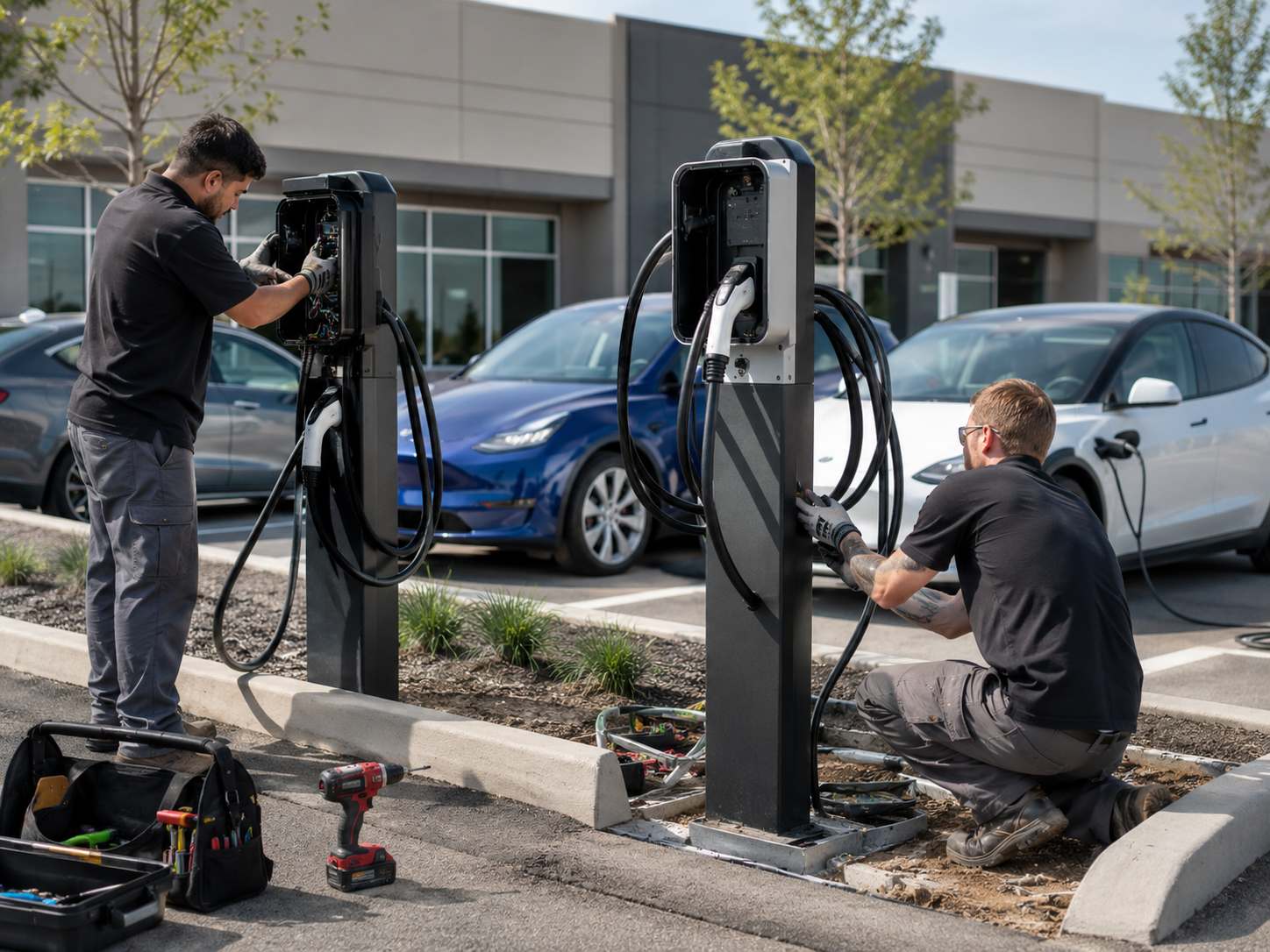
A home EV charger installation in Ontario must go through the Electrical Safety Authority’s permit and review process, but that does not necessarily mean every installation receives an in-person ESA inspection.
ESA requires an electrical permit—called a Notification of Work—to be filed before an EV charger installation begins.
After that, ESA determines the appropriate review or inspection process based on the installation and its risk assessment.
ESA specifically states that the inspection process can vary and that an inspection may sometimes be deemed unnecessary. When comparing installers or buying EV chargers, make sure the complete electrical installation—including permitting, approved equipment and the final Certificate of Acceptance—is part of the plan.
That distinction is important.
Is an ESA Permit Mandatory for an EV Charger?
Yes.
ESA says all EV charger installations require an electrical permit before work starts.
The permit creates a record of the electrical work and triggers ESA’s review process.
So even when an in-person inspection is not ultimately required, the electrical installation still needs to be properly notified.
Who Arranges the ESA Process?
If you hire someone to install your home charger, the electrical work must be performed by a Licensed Electrical Contractor.
The contractor normally:
- files the Notification of Work;
- performs the electrical installation;
- requests the appropriate inspection or review; and
- provides the Certificate of Acceptance once the work has been accepted.
ESA states that Licensed Electrical Contractors are responsible for filing the electrical notification and requesting the inspection when hired to perform the work.
Will an ESA Inspector Visit My Home?
Possibly.
ESA uses a risk-based approach, so the exact process can vary from one installation to another.
According to ESA, its evaluation of the project’s safety risk may result in an inspection being deemed unnecessary.
On other projects, an inspector may need to attend the property.
The important point is that the contractor does not simply decide to skip the ESA process. The Notification of Work must still be filed.
Could an EV Charger Require More Than One Inspection?
More complicated electrical work can involve multiple inspection stages.
ESA identifies several possible inspection types, including:
- service inspections;
- rough-in inspections; and
- final inspections.
For example, an installation involving wiring that will later be concealed or buried may need to be reviewed before that wiring is covered.
A service upgrade can introduce additional requirements because the utility may need to disconnect and reconnect electrical service.
What Happens During the Review?
The purpose is to determine whether the installation complies with the Ontario Electrical Safety Code.
The contractor is responsible for installing the charger, branch-circuit wiring, overcurrent protection and related electrical equipment in accordance with applicable requirements.
ESA also requires home EV charging equipment to carry an accepted Canadian certification mark or evaluation label.
If inspected work does not comply, ESA can identify defects that need to be corrected before the installation is accepted.
What Is an ESA Certificate of Acceptance?
After the notified work has been reviewed and accepted as compliant, ESA issues a Certificate of Acceptance.
ESA recommends keeping this document because it can be important for insurance, resale and your own records.
If the contractor filed the Notification of Work, ask them for a copy of the certificate once the process has been completed.
What About a Plug-In EV Charger?
Do not assume that choosing a plug-in charger means no electrical permit or review is involved.
If a new 240-volt receptacle and circuit are being installed for Level 2 charging, that electrical work must comply with Ontario requirements.
A portable charger plugging into an already-existing suitable electrical installation is a different situation from installing new wiring specifically for EV charging.
The electrician should evaluate the complete installation rather than treating the charger itself as the only component.
Why Does ESA Compliance Matter?
Level 2 EV charging can create a significant continuous electrical load.
ESA advises homeowners to confirm that the electrical panel can handle the additional demand and that approved charging equipment is used.
The permit and review process provides documentation that the installation was reported and accepted under Ontario’s electrical safety system.
Frequently Asked Questions
Is an ESA permit the same as an inspection?
No. The Notification of Work starts ESA’s review process. The project may or may not require a physical inspection depending on ESA’s assessment.
Who pays the ESA fee?
The fee is associated with the Notification of Work. When using a contractor, confirm whether ESA-related fees are included in the installation quote.
Do I get proof after the installation?
Yes. Once the work is accepted as compliant, a Certificate of Acceptance is issued.
Final Answer
An EV charger installation in Ontario must be reported to ESA through a Notification of Work, but every installation does not necessarily receive a physical on-site inspection.
ESA determines the appropriate review based on the project and its risk-assessment process.
The safest way to think about it is this:
ESA notification is mandatory; the exact inspection process is determined by ESA.